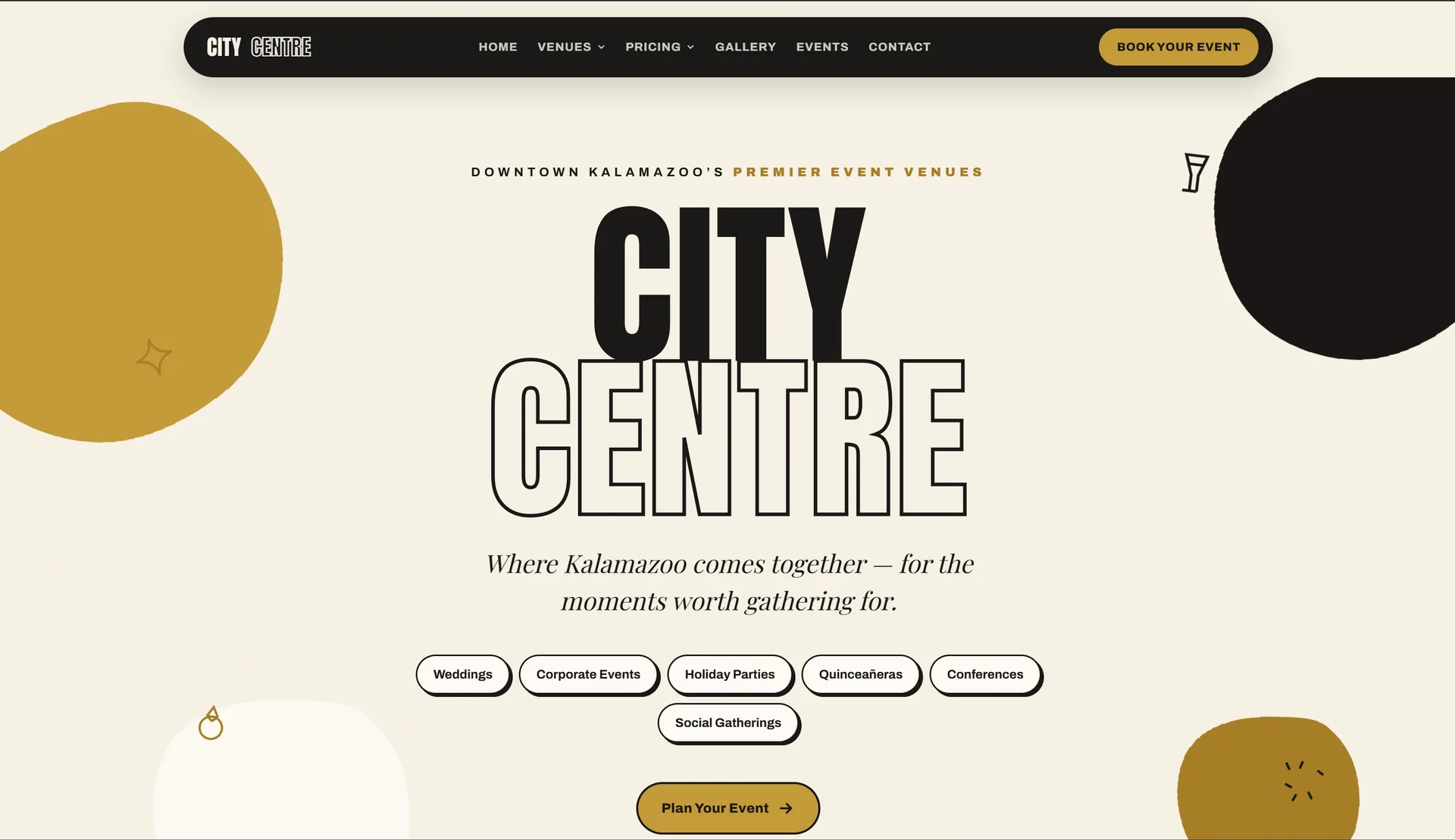
Events / Hospitality
Kalamazoo City Centre
An event venue site with a fast booking flow out front and a full admin dashboard behind it, both running off one shared calendar.
Read the case studyWeb App Development
Web application development means building software that runs in a browser and does actual work — taking bookings, tracking jobs, quoting, approving, reporting — rather than a website that only presents information. An application has user accounts and permissions, a real database behind it, an admin panel your staff works in, and screens shaped around the task each person is doing. It is what replaces the spreadsheet, the shared inbox, or the paper process a business is currently held together by.
Fit
One file has become the system of record. It is edited by several people, versions have quietly diverged, and one wrong sort or deleted row can cost a day of reconstruction.
Appointments, reservations, or orders arrive across calls, texts, and email, then get copied into a calendar by hand. Double-bookings and missed messages are a scheduling problem, not a staff problem.
You license a platform, use a fraction of it, and still export to a spreadsheet for the one step it cannot do. The subscription grows while the workaround stays.
Answering a simple question about jobs in progress, revenue this month, or who is behind means asking three people and waiting. The data exists; nothing puts it on one screen.
Why it matters
Deliverables
Process
STEP 01
We sit with the people doing the job and follow one real record from start to finish. That surfaces the exceptions, the informal rules, and the steps nobody documented, which is usually where off-the-shelf software fails.
STEP 02
Before features get built, we settle what a record is, how records relate, and who may touch each one. Then each role gets screens showing only what that person needs, reviewed as clickable pages rather than diagrams.
STEP 03
The application is built one workflow at a time on a private URL, starting with the part causing the most pain. Your team uses it on real work while the rest is developed, so problems surface before launch.
STEP 04
Existing data is imported and checked against the source, permissions are verified role by role, and staff are trained on the screens they own. We stay engaged after launch, when the real edge cases appear.
Stack
Most internal tools and applications run roughly eight to sixteen weeks from kickoff to launch, depending on how many roles, workflows, and outside integrations are in scope. Because the build is phased, teams typically start using the first workflow well before the whole system is finished. Data migration and the review time your staff can give are usually what move the date, so both get scheduled at the start.
Applications are priced per phase rather than as one lump sum, after a paid discovery stage that produces the data model, the screen list, and a written scope you own regardless of who builds it. What drives the number is the count of distinct user roles and workflow screens, how many outside systems must connect, and how messy the data being migrated is. Hosting and database costs are billed by those providers directly at whatever your usage costs, not marked up.
Proof
Events / Hospitality
An event venue site with a fast booking flow out front and a full admin dashboard behind it, both running off one shared calendar.
Read the case study
Restaurant / Food Service
A custom online ordering platform — menu, cart, pickup and delivery — built for a Kalamazoo cheesesteak and hoagie shop.
Read the case study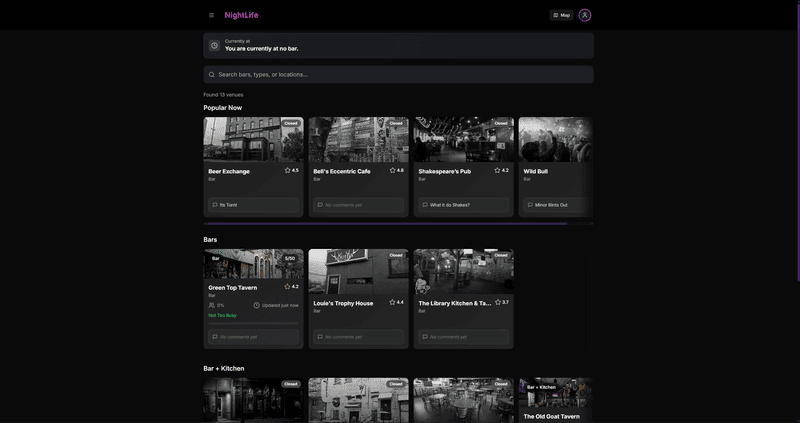
Nightlife / Consumer Web
A founder-built nightlife platform that answers “where are we going tonight” with what is actually open and on, not a static directory.
Read the case studyFAQ
Last reviewed
Tell us what you are building. We will reply with a scoped proposal — timeline, approach and pricing — so you can decide with real information.