Element

3D & Interactive

3D and interactive websites that still load fast

A 3D or interactive website uses real-time graphics and motion in the browser — a product you can spin, a space you can move through, a story that unfolds as you scroll — instead of flat images and text. Element Web Company, based in Kalamazoo, Michigan, builds these with Three.js and WebGL on top of a normal, fast website, so the interaction is part of the page rather than an embedded gimmick. Every scene is built to a performance budget, falls back gracefully on older phones, and respects a visitor who has asked their device to reduce motion.

Fit

Who this is for

Product companies with something physical to show

Manufacturers, hardware brands and furniture makers whose product is easier to understand when you can rotate it, open it, or see the finish change than when you read a spec sheet.

Venues, developments and spaces

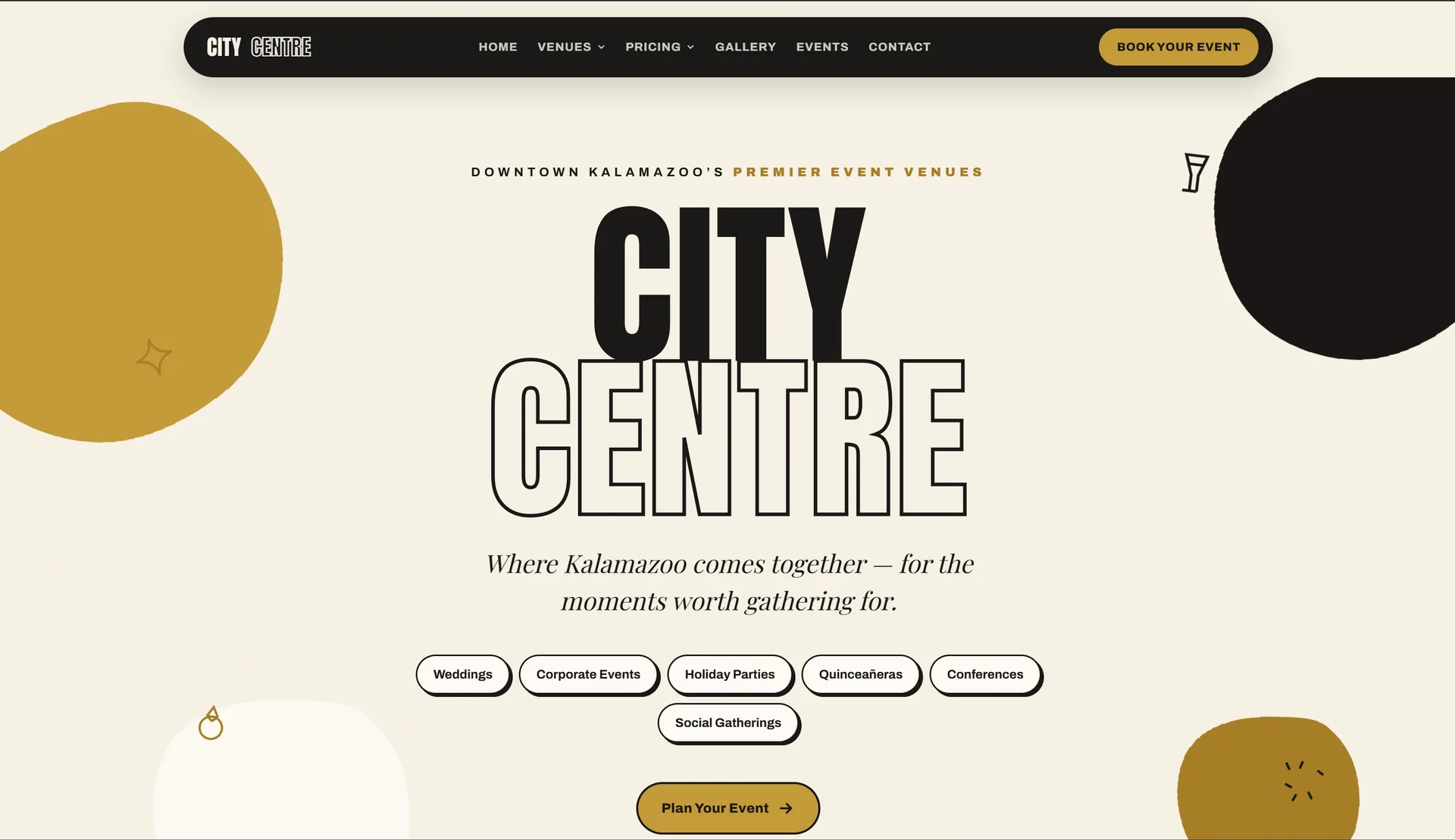
Event spaces, real estate developments and buildings where the decision depends on understanding a room or a site plan. A walkthrough answers questions a gallery of photos leaves open.

Brands competing on craft

Studios, agencies and premium products whose whole pitch is that they care about detail. A site that moves well is direct evidence of that, and a stock template quietly argues the opposite.

Businesses explaining something complicated

Companies whose service involves a process, a system or a set of moving parts. Motion can show the sequence step by step in a way a paragraph and a diagram usually cannot.

Why it matters

Problems this solves

  • The product has to be turned over, opened or configured to make sense, and flat photography keeps leaving the same questions unanswered.
  • An agency delivered an impressive animated site that takes eight seconds to appear and drains a phone battery, so most visitors never see it.
  • The site animates constantly — every heading fades, every card slides — and none of the movement tells the visitor anything.
  • A 3D configurator or viewer works on a desktop with a good graphics card and either stutters or shows a blank rectangle on a mid-range Android phone.
  • Motion effects were bolted on with a page-builder plugin, so they fight the layout, break the scroll position, and cannot be tuned.
  • Visitors with vestibular sensitivity or reduced-motion settings get the full parallax treatment anyway, because nobody wired the preference up.

Deliverables

What you get

  • Custom Three.js or WebGL scenes built for your subject — product, space, or process — not a licensed template with your logo dropped in
  • Scroll-driven choreography where motion is tied to a specific point being made, with a written rationale for each moment
  • Optimised 3D assets: geometry decimated, textures compressed, draw calls reduced, and models loaded progressively rather than in one blocking download
  • A measured performance budget covering bundle size, time to first render and target frame rate, reported before and after launch
  • Device-tier detection with a designed fallback — reduced scene, video, or static art direction — so low-end phones get something intentional instead of a crash
  • A full prefers-reduced-motion path where transitions become instant state changes and nothing autoplays, plus keyboard and screen-reader access to the same content
  • Interactive states wired to real content: configurable options, hotspots, and camera positions you can link to directly
  • Source files, assets and a walkthrough of how the scene is structured, so another developer can maintain it later

Process

How the work runs

STEP 01

Decide what the motion has to prove

Before any scene exists, we name the thing a visitor misunderstands and what interaction would fix it. If a photograph and one sentence would do the job better, that is what gets built instead.

STEP 02

Prototype the hardest moment first

The heaviest scene gets built early as a rough prototype and tested on real hardware — a mid-range phone on cell service, not a laptop on office wifi. Feasibility is settled before the design is finished.

STEP 03

Build the site, then layer the scene

The page is built to work fully without WebGL: real text, real links, real forms. The 3D layer loads on top of that foundation, so a slow connection or a failed context degrades instead of blanking the page.

STEP 04

Tune, cut and launch

Frame rate, memory and load time are profiled across devices, then effects that cost more than they contribute get cut. Reduced-motion and fallback paths are tested as seriously as the main experience.

Stack

Technology

Three.jsGSAPFramer MotionReactNext.jsTypeScriptTailwind CSSVercel

Timeline

A site with scroll-driven motion and one signature interactive moment typically runs about six to ten weeks. Projects built around a full 3D scene — a configurator, a walkthrough, a product you can take apart — usually take longer, and the schedule depends heavily on whether usable 3D models already exist or have to be built and optimised from scratch. Performance tuning is treated as its own phase near the end rather than something squeezed in before launch.

Pricing

Interactive work is quoted as a fixed project price after a scoping conversation and, where the concept is unusual, a short paid prototype so neither of us is guessing. The number is driven by how many custom scenes there are, whether 3D assets exist already or need modelling and optimisation, how much of the motion is bespoke choreography versus standard transitions, and how many fallback paths the audience requires. Ongoing maintenance for scenes that change with your product line is quoted separately.

FAQ

Frequently asked questions

Will a 3D website slow my site down?
It will if nobody sets a budget. The approach here is to build the page so it renders and works without WebGL, then load the 3D layer separately once the content is usable. Geometry, textures and shaders are optimised to a target, and effects that push past it get cut rather than shipped.
What happens on an older phone?
The site checks what the device can handle and picks a path. Capable phones get the full scene at a reduced quality tier; older or throttled devices get a designed fallback — a lighter scene, a short video, or strong static art direction. Nobody sees a blank rectangle or a spinner that never resolves, and no phone gets cooked rendering a scene it cannot sustain.
Is this accessible to people who get motion sickness?
Yes. Every build reads the operating-system reduced-motion preference and honours it: parallax stops, transitions become instant state changes, and nothing moves without the visitor causing it. The content shown by the interaction is also reachable as ordinary text and controls, so keyboard and screen-reader users get the same information rather than a degraded summary.
How do I know the animation is worth it and not just decoration?
Each interactive moment has to answer a question a customer actually asks — how big is it, how does it open, what does that finish look like, how does the process work. If a moment cannot be traced to one of those, it does not get built. That test kills a lot of ideas early, which is the point.
Do you need existing 3D models, or can you make them?
Either works. If you have CAD or product models, those get cleaned up and optimised for the web, which usually means dramatically reducing geometry and baking detail into textures. If nothing exists, models can be built from photographs, drawings or the physical product. Sourcing is a real part of the schedule, so it gets settled during scoping.
Does an interactive site hurt SEO?
Not when the content lives in the page rather than inside the canvas. Headings, copy, links and structured data are rendered as normal HTML with Next.js, and the 3D layer sits on top. Search engines read the page whether or not WebGL runs, and fast first paint helps rather than hurts.

Ready to talk about 3d & interactive?

Tell us what you are building. We will reply with a scoped proposal — timeline, approach and pricing — so you can make a decision with real information.